Same frame in both forms (2007, track 77, hour 11) · tensor tiles show the central 1,024 km of 2,048 km · masks are 0/1
Design · models
Subject: vision foundation models. Baselines: CNNs.
Model
Pretrained on
Reads image
Reads tensor
Prompted
Frozen + readout
Adapted
Vision foundation models
Qwen3-VL full VLM · 4B, 8B, 32B
Images + text (vision–language model)
●
–
8B, 32B
–
●
Qwen3-VL vision encoder · 4B, 8B, 32B
SigLIP2, trained further inside the VLM
●
–
–
●
●
SigLIP2 So400m
Web images + captions
●
–
–
●
●
DINOv2 ViT-L/14
Web images, no labels
●
–
–
●
●
CNN baselines
ResNet-18
Random start or ImageNet photos
●
●
–
●
●
ConvNeXt-T
ImageNet photos
●
–
–
–
●
No network was pretrained on radar data.
4B / 8B / 32B name the parent VLM. Its vision encoder is only ≈0.3B (4B) or ≈0.4B (8B, 32B) parameters.
Training settings were carried over from earlier experiments on a subset of tracks, not tuned on the reported folds
Design · levels of training on expert labels
Three ways to use a pretrained model
pretrained, frozentrained on expert labels
1 · Prompted
Nothing is trained
image + written class definitionszero-shot, or with 12 labeled examples
↓
vision encoder + language model
↓
answer letter A–F
Who: Qwen3-VL 8B and 32B
2 · Frozen features + readout
Only a linear readout is trained
image (or tensor for ResNet-18)
↓
pretrained networkweights unchanged
↓
linear readoutlogistic regression
Who: all foundation encoders, ResNet-18
3 · Adapted
The network itself is adjusted
image (or tensor for CNNs)
↓
networkencoders and VLMs: low-rank adapters (LoRA), 2 epochs CNNs: all weights, 14 epochs, augmentation
↓
linear layer
Who: every model · also with 25% and 50% of the labeled tracks
Recipes differ between CNNs and foundation models, so their comparison is between pipelines, not pretraining alone
Design · scoring
One six-way decision, scored three ways
A model's output for one frame (illustration)
Not a two-stage design. Each model makes one six-way choice. No separate line detector feeds a line-type classifier; both sub-scores are read off the same output.
5,822 frames
Six-class
The top class vs the expert's class. Here: TS.
5,822 frames
Line vs no line
Collapse the choice to NL vs any of the five line classes. Here: line. The expert calls 51% of frames a line.
2,957 frames
Line type
Only frames the expert calls a line. The model's best of the five line classes, ignoring NL. Here: TS. Scored even if the model's top class was NL.
How every model is tested: 5 rounds, each holding out one fold of whole tracks
Cohen's κ vs the expert on the pooled held-out predictions · 95% intervals from 1,000 resamples of whole tracks
Result 1
How much transfers depends on how the model is used
+0.06Frozen Qwen3-VL features over frozen ImageNet features, 5 of 5 folds [0.04, 0.08]
+0.14From adapting the Qwen3-VL encoder with expert labels [0.12, 0.16]
0.56–0.61All adapted networks, CNNs included. Training on labels closes most of the gap.
Prompted, the VLM finds some lines but cannot type them (κ ≈ 0). After adaptation every network separates line from no line about equally well (85–86% correct); the networks differ more on line type.
κ · the panels use different frame sets (5,822 and 2,957), so compare within a panel · prompts range 0.23–0.27 and −0.01–0.04
Result 3
After training: a small but consistent lead over CNNs
Qwen3-VL 32B encoder only
Qwen3-VL 32B encoder + language model
ResNet-18 tensor
ResNet-18 image
ConvNeXt-T image
Six-class κ
0.606
0.586
0.573
0.579
0.576
Line vs no line, % correct
86.2
85.8
84.9
85.1
85.8
Line type κ
0.53
0.49
0.50
0.49
0.47
F1, TL/AS (6% of frames)
0.43
0.34
0.31
0.33
0.34
F1, BB (3%)
0.33
0.36
0.22
0.30
0.23
F1, LS (3%)
0.29
0.17
0.35
0.27
0.23
Training time, minutes per fold
24
165
1.0
1.6
5.6
+0.03 κover each CNN, in 5 of 5 folds
≈ 2× labelsabout what a CNN gains from doubling its labeled tracks (+0.03)
−0.02 κadding the language model (full VLM vs its own encoder)
ResNet-18s from ImageNet weights; from random weights the tensor ResNet-18 reaches 0.577 · bold = best in row
Result 4
Foundation model and CNN make different errors
Averaging the probabilities of
Gain in κ
two ResNet-18 seeds
+0.007
two Qwen3-VL 32B seeds
−0.001
Qwen3-VL 32B + 4B encoders
+0.010
Qwen3-VL 32B + ResNet-18
+0.024
Gains are over the better single member. Grey: interval includes zero. Against the ResNet-18 alone, the mixed pair gains +0.058 [0.042, 0.072].
Part of the difference may come from the inputs: the encoder reads the image, this ResNet-18 the tensor.
A morphology record: close class frequencies, too many hourly changes
expertQwen3-VL 32B encoder
Class shares stay within 3.4 percentage points of the expert's, but the predicted class changes in 30% of hourly steps against the expert's 18.5% (+11.2 [9.7, 12.9]). Averaging probabilities over 3 h overshoots to 15.8%, with κ unchanged (0.614).
Held-out predictions along each track · one expert's record is the reference, not a validated climatology
Prompting: one prompt design, one draw of examples, one VLM family.
No size claim: 4B → 32B barely changes the encoder (0.3B → 0.4B).
Line type is conditional on the expert's line frames.
Open decisions
Title settled: "Adapting Vision Foundation Models to Weather Radar Imagery: Classification of Mesoscale Convective System Morphology". Letter v4 (23 Nov) is rewritten to this frame.
Done in v4: Fig. 2 = prompting → frozen → adapted, label budgets, size/language/definitions; Fig. 3 = line vs no line and line type.
Done in v4: levers figure moved to the SI; Fig. 4 = per-class F1 and the morphology record.
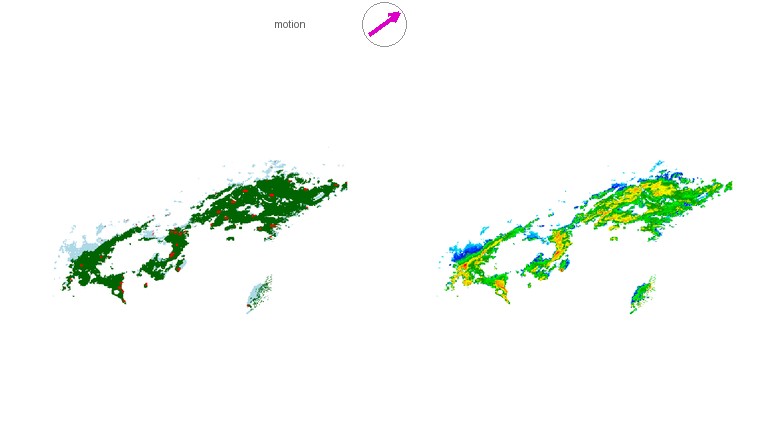
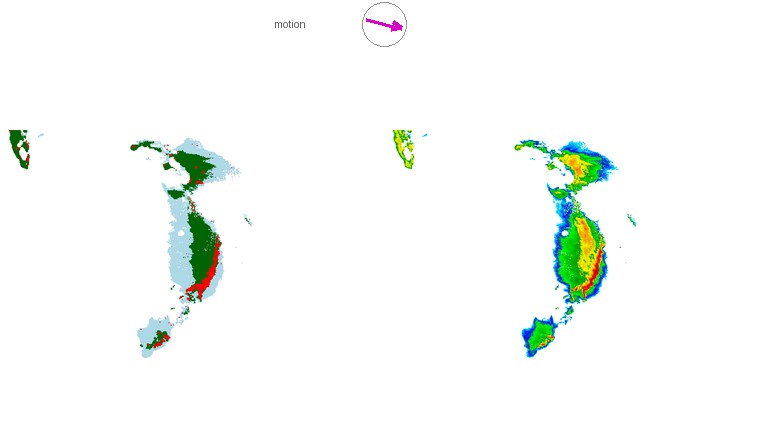
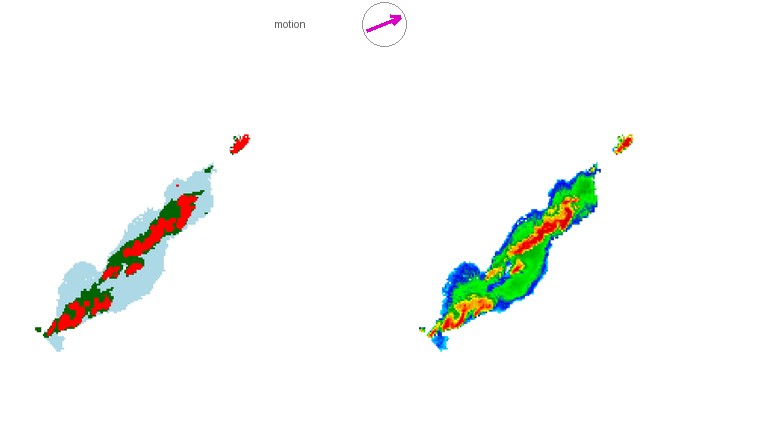
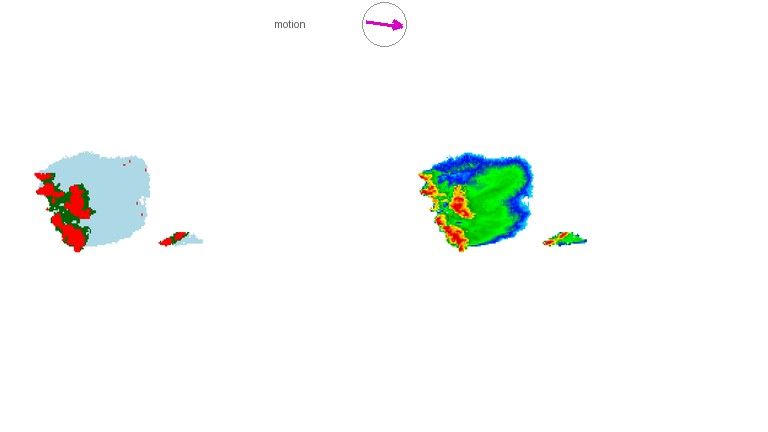
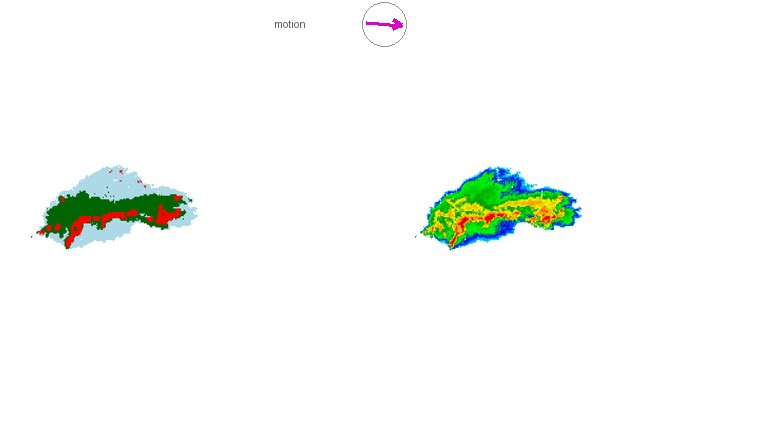
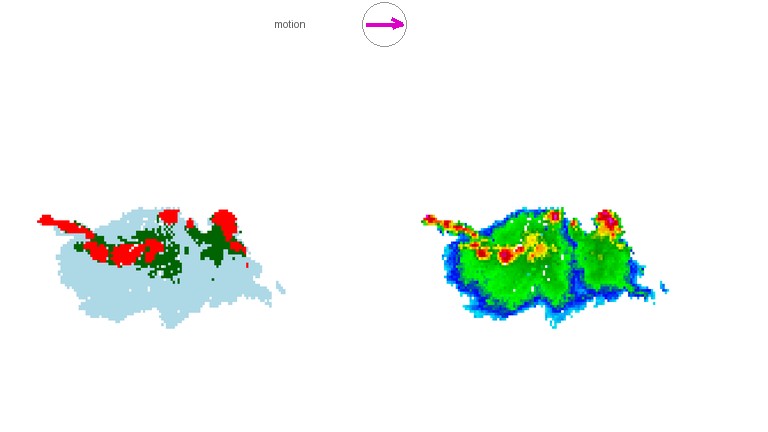
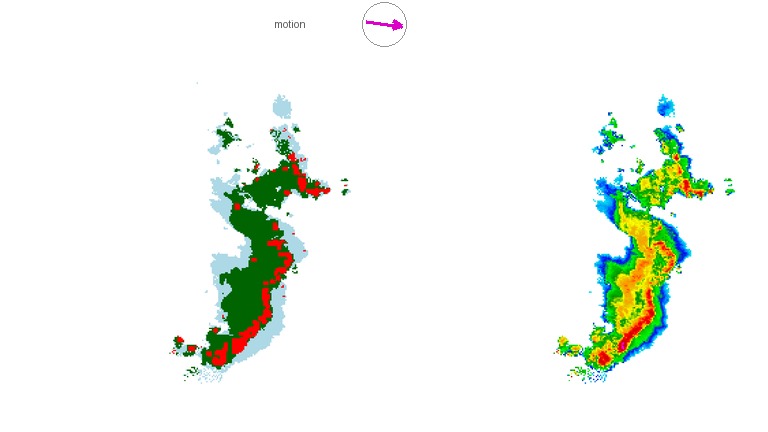 ← motion arrow
SL3D echo type
composite reflectivity
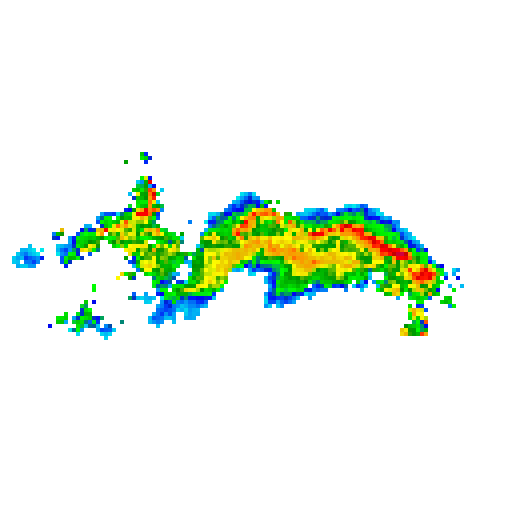 motion ↑